Date: November 24, 2024
Scripture: John 18:33-37
Sermon Title: “Who Is Your King?”
Preacher: Rev. Dr. Bob Jon
On May 6, 2023, the coronation of King Charles III and Queen Camila took place inside Westminster Abbey in London. The ceremony was the first since Queen Elizabeth II ascended the throne in 1953. As you can imagine, it was one of the most expensive celebrations, costing $91 million for British taxpayers. As the amount of coronation may sound outrageous to some of us, the news reports that the total bill for Queen Elizabeth’s state funeral cost more than twice the coronation—$204 million. There are people who criticize such spending, as Britain is wrestling with soaring energy and grocery bills, as 204 million could provide over 50 million free meals for schoolchildren in London.
Some years ago, I got a call that Andrew was sick. He was a recent immigrant with his family—wife, and two young sons. He was diagnosed with the last stage of cancer. As this family had no car, I brought his wife and two sons with me so they could say goodbye to each other. I saw him, weak and fragile, holding his two sons tight in his arms and probably telling them to be good boys and listen to their mother, and he loved them very much. After he died, there was no way Andrew’s remaining family could pay for the service from the funeral home. So, I met with the funeral director and helped negotiate the price, which came down to $1500. $204 million funeral versus $1500 one.
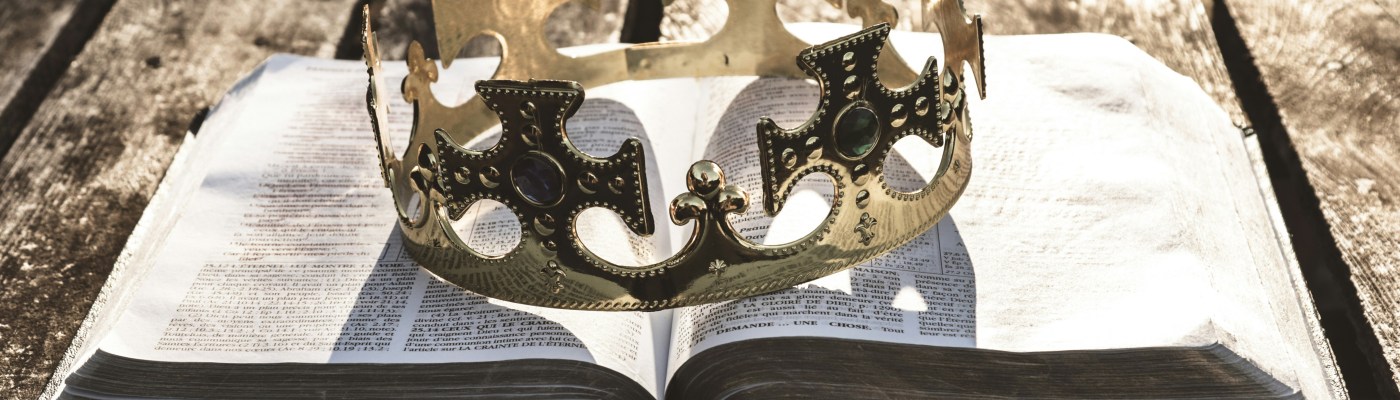
When we say that today is Christ the King Sunday, some of us might be curious why we need Jesus as our king. For many Americans, the image of Jesus as a king might seem irrelevant because America has not had a king since the end of the American Revolutionary War in 1783. There are still other countries, such as the United Kingdom, Sweden, Thailand, Japan, and Tonga, that have their kings or queens. If we ask why we need a monarchy in the 21st century, these countries might argue that the king or queen is important in terms of their symbol of unity, tradition, and revenue through tourism. Nevertheless, for many modern minds, it is difficult to imagine having a king or queen when we live in a democratic country where everyone is supposed to be equal in their human rights.
When we consider why we celebrate Jesus as our king, I believe that it is insightful to see why and how the Israelites demanded their first king. According to 1 Samuel 8, all the elders of Israel came to Samuel and said, “You are old, and your sons do not follow your ways; now appoint a king to lead us, such as all the other nations have.” Samuel was not happy to hear this and prayed to God. God answered, “It is not you they have rejected, but they have rejected me as their king. They have done this from the day I brought them up out of Egypt until today, forsaking me and serving other gods, so they are doing this to you. Just listen to them but warn them what their king will do to them.”
So, Samuel said these words to them, “This is what the king will claim as his rights: He will take your sons and send them to the war. He will take your daughter and make them perfumers, cooks, and bakers. He will take your fields and vineyards. He will take a tenth of your possession as his tax. He will take a tenth of your flocks and you might even become his slave. Someday, you will cry out to God, asking them to save you from the king you have chosen, but the Lord will not answer you on that day. Is this still what you want?” The people answered, “We want a king over us. Then we will be like all the other nations, with a king to lead us and to go out before us and fight our battles.”
In the history of the Israelites, God was the king over the people. God created people and nature in the beginning. God called their ancestors, Abraham and Sarah to the promised land. God saved Jacob and his family from famine by sending them to the land of Egypt through Joseph who was sold as slave by his own brothers. As the people became slaves under Pharaoh and cried out for delivery, God listened to them and sent Moses to lead them out of Egypt. God led God’s people through the wilderness for 40 years and helped them win the battle as they entered the promised land. God was their king who provided them with food and drink, fought the battle for them, and gave the law to obey. But people wanted to have a king whom they could see with their eyes, even if the king would oppress them, treat them unjustly, and even exercise violence.
In the United States today, we say that we do not have an official king. But I believe that all of us have some kind of king or queen that we establish to surrender our will to it, take our allegiance with it, or even give our lives for it. Some worship capitalism as our king to rule and order our economic system. In the free market system, the rich become richer while the poor become poorer. With money becoming the ultimate means of happiness, people discard not just social morality but also biblical law to care for the poor and weak in our society, such as orphans and widows. Or our king or queen could be the guns and violence. In the U.S., according to the Johns Hopkins Center for Gun Violence Solutions, for the third straight year, firearms killed more children and teens than any other cause, including car crashes and cancer.[1]
And we are witnessing the scene in today’s text in which Pilate has summoned Jesus for a trial. Jesus stands on the court, arrested and accused of promoting political and religious turbulence. Pilate, who represents the Roman emperor, asks him, “Are you the king of the Jews?” Jesus looks at him and asks, “Is that your own idea, or did others talk to you about me?” Pilate replies, “Am I a Jew? Your own people and chief priests handed you over to me. What have you done?” And Jesus answers, “My kingdom is not of this world. If it were, my servants would fight to prevent my arrest by the Jewish leaders. But now my kingdom is from another place.”
Pilate interrogates Jesus because he wants to know if Jesus is a threat to the Roman empire. He wants to know if Jesus would take up an arm and lead his people in revolt against the empire. At least, that was what Judas, the disciple of Jesus, wanted to see happen all along as he saw many crowds follow him. But Jesus answers that his kingdom is not of this world. While the earthly kingdom uses violence to subdue its people and threatens to lock them in jail, the kingdom of God was present when Jesus healed the sick, fed the hungry, forgave the sinner, ate with the tax collectors, drove the demons out, and performed the miracles. While the Roman empire threatened anyone who did not conform to its politics with violence, the kingdom of God belongs to the poor in spirit and those who are persecuted because of righteousness. (Matthew 5)
While some people might say that Jesus’ answer indicates the separation between the state and church, Barbara Lundblad, professor of preaching at Union Theological Seminary in NY, argues that “to proclaim Jesus as King is a subversive act.” She tells the story of one of her students, who was an Anglican priest from South Africa. During the class, he shared a story about what it was like to believe Jesus as King during the days of apartheid. “Our whole congregation was arrested,” he said, “for refusing to obey the government.” When Lundblad thought that she misheard him, he went on to say that all 240 members of the congregation were arrested and put in jail – from babies to a 90-year-old man.
Today, we still witness the ongoing domination of the world through violence. In 2017, the dictator of North Korea, Jong-Un Kim, ordered to kill his half-brother Kim Jong Nam, the first-born son of Kim Jung-Il. Feeling threatened by his presence, Kim Jong-Un orchestrated the assassination of his own brother, who was visiting Malaysia. In 2018, the crown prince of Saudi Arabia ordered the murder of U.S. resident and Washington Post columnist Jamal Khashoggi, a journalist who criticized the royal family. While the earthly kings, worldly leaders, and authorities may have power over their people temporarily, controlling their bodies and possessions, we acknowledge our kingship of God, who is eternal and who reigns both our body and soul.
I began my sermon this morning by asking why we celebrate the Christ King Sunday today. The story about the origin of it will serve as the closing of this sermon nicely. After the end of World War I, the nations were grieving over the loss of many lives, as government structures and institutions were left devastated. People were filled with terror. In 1925, Benito Mussolini made a speech to the Italian Chamber of Deputies that served as a turning point for his reign of fascism. In 1925, Hitler was rebuilding the Nazi party and established his role as the leader. The following year, the Ku Klux Klan held a march in Washington, DC that attracted 35,000 white supremacists. In the words of Melisa Florer-Bixler, “The future was uncertain.”[2]
One month into the war, Pope Benedict XV began his papacy and appealed to all combatants to “put an end at last to this horrible slaughter, which for a whole year has dishonored Europe.” So, in 1925, Pope Pius XI, the successor of Benedict, instituted The Feast of Christ the King on the last Sunday of October in his response to growing secularism and nationalism. Pope Pius wanted to remind the church that God is the ultimate and true king over history and nations. In the midst of false allegiance, division, violence, and threat, we Christians are empowered to acknowledge our allegiance with Jesus as our king who forgives sinners, welcomes strangers, feeds the hungry, and eventually dies on the cross bearing the sins of ours and the world.
I wonder if we are ready for the coming of Christ. Maybe some of us are preoccupied with how to prepare for Thanksgiving week. Maybe some of us have already set up the Christmas tree. Maybe some of us have a long list of shopping for gifts before Christmas comes. Whether we are ready or not, Christ is coming as the humble Messiah, a king born in a manger surrounded by foreigners, shepherds, and animals; a king would go to the cross wearing a crown of thorns. But this king does not order others to go to the battle and die for him. Instead, he dies for us so that we can have eternal life in him overcoming the reign of death and violence in this world. I pray that God opens our hearts and minds in this season so that we can humbly prepare the way for Christ to come and be the king in our lives.
Amen.
[1] https://publichealth.jhu.edu/2024/guns-remain-leading-cause-of-death-for-children-and-teens (Accessed on November 23, 2024)
 RAIN OF GRACE