Date: August 6, 2023
Scripture: Matthew 14:13-21
Sermon Title: “More than Enough”
Preacher: Rev. Dr. Bob Jon
You can also listen on Podcast from iTunes and Spotify. Search for “Podcasting from Rev. Bob Jon.”
Not long after the pandemic started in 2020, there was a crisis with supply leading to a shortage of many items. There was a shortage of food, baby formula, cream cheese, aluminum, dog food, and of course, toilet paper. At that time, a parishioner whom I met during my seminary years posted on Facebook an episode that she experienced one week. She went to a grocery market for shopping and saw a man pushing a cart full of toilet paper and paper towels. She confronted him and said, “Shame on you! It is because of a hoarder like you, people jump from one store to another, trying to find them!” When she was done yelling, the man finally opened his mouth and said, “Ma’am, I just work here.”
Many of us still remember the time when the shelves at many grocery stores were empty. No meat, no canned food. Many people were hoarding the grocery items because of fear that they may not have enough for tomorrow. It did not matter how much we had in our wallets. People could not buy the grocery items because they were not available. And here is the reality today. A couple of weeks ago, the government of India decided to impose a ban on certain rice due to the heavy rain that destroyed many rice paddy fields. India accounts for more than 40% of world rice exports. And this decision will immediately impact countries like Thailand, Vietnam, and countries in Africa.[1]
I am not trying to scare anyone about the global crisis in supply. I am sure that we, as a nation and people, will collectively find a way to deal with the climate crisis and supply disruption. At the same time, we can look back on this pandemic and think that there are always people, whether in our community, country, or world, who experience a shortage of many things, wrestling with scarcity. There are parents in the world who wipe their tears as they see their little children go to bed with empty stomachs. It is not just an issue in third-world countries. But it happens in our community and country, as I was surprised to see that our church was giving out Thanksgiving baskets to people here in Chelmsford.
In our reading today, we also meet Jesus’ disciples dealing with scarcity. When Jesus heard that his cousin John the Baptist was killed by King Herod, he withdrew in a boat to a deserted place by himself. Sometimes, Jesus withdrew to a deserted place to pray to God. Other times, he did so to refresh himself and gain strength. But at this time, he was probably grieving the loss of his family, the prophet who prepared the way for him by standing in the wilderness and inviting people to repent of their sins. Maybe he was grieving that would also be his fate, as he would be led to the cross on the hill, mocked by the solders and the crowd. But even in that deserted place, Jesus could not stay alone because the crowd came to him.
Why did they come? They came to be healed by Jesus. In the previous chapters, Jesus healed a man with a skin disease and healed a centurion’s servant by speaking the words. He healed Peter’s mother-in-law with fever, and healed men possessed by demons, and made a paralyzed person walk again. He healed blind men, opened the mouth of a person who could not speak, and healed a man with a withered hand on the Sabbath. So, the words spread quickly. People from all over the country came to Jesus to be touched by him and be healed. Wouldn’t we have done the same? If there is someone who can heal every illness in this world, what would you withhold for healing?
So, Jesus healed everyone, men and women, young and old. And it was the evening. People were going hungry. The disciples came to Jesus and said, “This is such a remote place and there are no restaurants around here. So, why don’t we let these people go into the villages and buy food for themselves?” In other words, they are saying, “We see these people are going hungry. And it is not our responsibility to feed them. So, please let them go and take care of themselves.” But Jesus says, “They don’t need to go anywhere. You give them something to eat.” The disciples panicked because they thought they had nothing to offer. They only had five loaves of bread and two fish.
The other day, I was watching a movie called The Bible with my family. Early in the movie, the scene showed the reading from today, a big crowd going hungry. The disciples came to Jesus and said, “What should we do with all these hungry people?” Sitting next to me, Joshua said, “Pizza, Daddy. They can order pizza.”
When these disciples saw what they had, they thought that they had not enough. There are thousands of people out there. What can we do with these five loaves of bread and two fish? Sure. Feeding the hungry is the work of God. But what can we do with such a small thing? At my first church, people were excited to have me as their new pastor as I was in my early 30s. When I did an interview with the SPRC, the members of the committee were excited to see me and said, “Now we hope you can bring some new young families with children to our church.” When I sat at the next finance meeting, the church had to make a tough decision with a budget cut. And the first line item to cut was Sunday school and youth.
I remember the early years of my ministry were often full of complaints. We do not have the money. We do not have volunteers. People are not generous enough. People do not want to be serious about their faith. The church is too old and costs a fortune to maintain. I was filled with a spirit of scarcity. Simply I did not have enough. Yes, I had a degree in seminary education. In working as a seminary intern and associate pastor, I thought I had enough experience to lead as a senior pastor. But I soon realized that I had zero to minimal experience to be a senior pastor. And I complained, “We simply do not have enough in our church.”
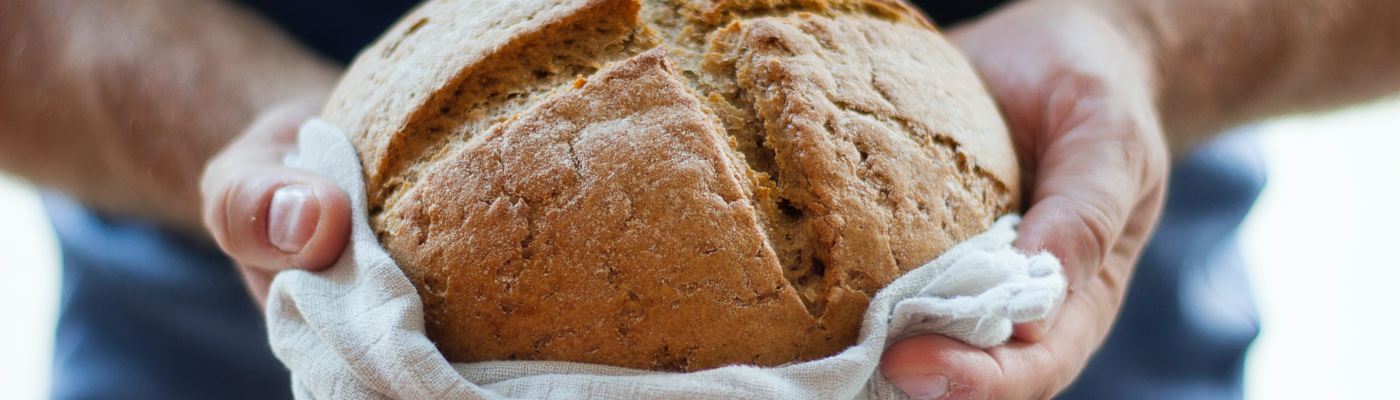
And Jesus told his disciples, “Bring to me what you have.” He ordered the crowd to sit on the grass. Then, Jesus took the bread and fish and looked up to heaven and blessed and broke the loaves and gave them to the disciples. The disciples went around giving the loaves and fish to people. A miracle took place. Everyone was fully fed and filled. They even took up what was left over of the broken pieces, which gathered in twelves baskets. The disciples were complaining that they did not have enough to do what Jesus was asking them to do. But Jesus turned what they had into more than enough. Christ turns our despair of “not enough” into our joy of “more than enough”
Although his disciples complained about what they did not have, Jesus asked them to bring what they already had and multiplied them. And a miracle came when there was a spirit of gratitude. Henri Nouwen says, “Gratitude is the awareness that life in all its manifestations is a gift for which we want to give thanks” Even when we go through sorrows and pains, we can still find a reason to be grateful. That we are grateful for our families and friends who love us as we are and take their time to be with us. When we feel not adequately equipped for a certain job or challenge, we can be grateful by humbling ourselves and seeking wisdom and guidance from God and others.
At least, that is what I have learned in the past years as a pastor. I have been learning the discipline of beginning with gratitude for what we have rather than complaining about what we do not have. At my first church, I later discovered that although we did not have a big youth group, we still had five children who taught me joy in children’s ministry. Although I did not have a huge crowd in the Bible study, I realized that there was a dedicated group of people who packed bags of food and delivered them to the local schools every week. Although we were not bringing in young families, God brought many interesting people – a homeless couple, a person who just came out of prison, a single mother with two years old boy living in a dangerous neighborhood. God helped me to see what God already gave and be grateful.
And I believe that there is a spirit of gratitude and generosity at Aldersgate UMC. A few weeks ago, our bishop asked all the churches to help the churches in Vermont by donating to UMCOR as they were flooded with heavy rain. The Sunday I made the announcement, there was a tornado warning in our community and the neighboring towns. I thought that we were not going to have many people for the service, but I was genuinely surprised and felt grateful that 45 people came to the church to worship that morning in addition to those who joined us online. And for the past two weeks, our church collected about $3,000 to be sent for the disaster relief work in Vermont.
But I am not just talking about the financial generosity of our church. I believe that there is a spirit of gratitude in welcoming one another, serving one another, and living as one family of God. There is a spirit of joy in preparing for the VBS as our love for children and young people multiplies, planting seeds in their hearts and growing in their love for God. During the week and Sunday, I see many people who come and prepare for the service, practice, and serve others in joy. And our youth group who took their time to join the national gathering of Youth 2023 in excitement. Although the flight was canceled and everyone had to change their plan, Cheryl told me that everyone was grateful to be there.
Our world often operates in the spirit of scarcity that we do not have enough for everyone. People accept the reality that there will always be the poor and rich. There will always be people who go hungry and thirsty. There is a spiritual depression that permeates not just our society but also church that there is nothing we can do about it because we do not have enough. But Christ invites us to bring what we have today and blesses us. He blesses our talents, our resource, and our love for God so that they can multiply to transform our world. In a world where people complain that we do not have enough, Christ calls us to shout, “We have more than enough.”
Again, Nouwen says, “How different would our life be were we truly able to trust that it multiplied in being given away? How different would our life be if we could believe that every little act of faithfulness, every gesture of love, every word of forgiveness, every little bit of joy and peace will multiply as long as there are people to receive it and that even then there will be leftovers.”[2] As Jesus looked up to heaven, blessed, and broke the bread, he has become the living bread for us, being given away in love and humility. And we who eat his body are to offer ourselves for the sake of this world by trusting in God, who invites us to bring what we have today and be part of God’s redeeming work in the world.
Amen.
[1] https://www.reuters.com/markets/commodities/india-prohibits-export-non-basmati-white-rice-notice-2023-07-20/
[2] Henri J. M. Nouwen, Life of the Beloved
 RAIN OF GRACE